Advanced Caddy Plugin Features

Previously, we talked about how to implement a simple Caddy plugin. In this post, we’ll talk about some of the more powerful features we can use. Registering New Types of Network Sometimes, we may want to securely expose a socket on a machine to a remote machine. We can set up an SSH tunnel to do so. The following example from the official documents shows how to set up an HTTP server this way. ...


published on March 10, 2024 · 4 min · 665 words

Writing a Chatbot Powered by Google Gemini Part II

We introduced the basic operations of a Telegram bots and how to create, configure a Telegram bot and how to use it to interact with users. This time, we talk about how to use Gemini to generate responses. Quick Start We can test Gemini api directly using the official website: We can modify some settings on the run: Modifying Model Parameters Model: which model we’re using. Different models are suitable for different tasks. Temperature: Controls the balance between creativity and focus in the generated output. Higher temperature leads to more adventurous output and vice versa. Stop Sequence: Generation will stop when specified output is generated. Useful for controlling output length and creating a clear ending. Safety Settings: Adjusts the restriction regarding harmful and explicit content. Top K: Controls the tokens at each step of the generation. Only top k words are considered. Top P: Only considers tokens whose cumulative probability falls within a certain threshold. Integration with Telegram We can refer to the quickstart to familiarize ourselves with the api. As said before, we’re only interested in handling text and image messages. ...

published on February 26, 2024 · 7 min · 1416 words

Writing a Chatbot Powered by Google Gemini Part I

Google released the Gemini model recently, and it’s free to use. We can use it to create our own chatbot. We’ll start with the introduction to Telegram bots because they are also free and can handle text and image messages. Bots on other platforms should be similar. Info There is a Golang library providing Telegram bots api wrappers. We don’t use it in this post because the api is very easy and self-explanatory. ...

published on February 9, 2024 · 6 min · 1121 words

Writing a Caddy Plugin Part II

Previous post discusses the basics of a Caddy plugin and shows an example of a bare-bone plugin. In this post we implement a Caddy module that listens to a TCP socket and replies Hello world to every connected client. Plugin Considerations Before we begin, we need to think about what our plugin can do and how its behavior can be customized by its user. Depending on the function, the full configuration may be complex, but we should provide a reasonable default to the user. ...

published on January 22, 2024 · last edited on February 3, 2024 · 4 min · 816 words

Writing a Caddy Plugin Part I

Caddy is a server best known for its auto HTTPS features. It manages TLS certificates automatically without any human intervention. It’s also quite extensible, there are some built-in namespaces that define how we can implement some interfaces to add new functionalities to Caddy. First, let’s see how Caddy works. Caddy Architecture Caddy has three parts: a commandline interface, a core and module system. Command Interface It is how Caddy interprets commandline arguments to run some common tasks such as printing help information and running a simple reverse proxy or a file server. ...

published on January 8, 2024 · last edited on February 1, 2024 · 2 min · 382 words

Tracking HTTP Upload Progress Using Golang

I wrote a simple cli tool to upload files to my Cloudreve instance. It’s easy to figure out which api to call when uploading files. However, it will be helpful to know how the upload is going. Visualizing Speed When creating an upload request, golang allows us to use a io.Reader as the request body. The body will be responsible for displaying upload progress. Info Although Cloudreve and its storage providers require Content-Length header to be set, thus requiring the total length to be known beforehand, this method is applicable even if the total is unknown. We lose out on the ability to track the percentage of the upload in this case though 🤷. ...

published on December 10, 2023 · 3 min · 574 words

Implementing JSON RPC With Python

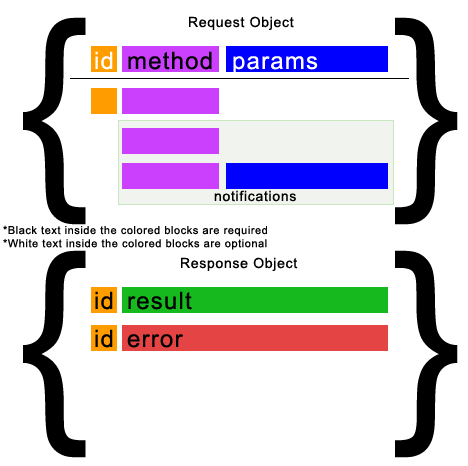
In a previous post, I mentioned using yt-dlp as a service to extract YouTube information. The method I used has one serious problems: it uses a custom protocol that serves one request per connection and dumps the error as a string if any. To find out if there is an error, we have to parse the result first and if it’s not a valid json string, we can be sure there’s an error. ...

published on September 6, 2023 · last edited on September 15, 2023 · 5 min · 908 words

Proxying Youtube Videos Part III

Previous post shows how to create a mpd manifest from the result of yt-dlp and play it using various players. However, there are some problems when we use the manifest with other tools such as ffmpeg and other video players rather than shaka-player and dash.js, mainly in the form of slow buffering. Determine the Cause of Slow Buffering First we determine how a browser requests YouTube assets. Open devtools: Request Query Parameters and Payload We can find the request is a POST request with query parameter range and payload x\n. After some testing it can be determined that range parameter controls which part of the assets the browser is requesting just like http range requests. ...

published on August 9, 2023 · 3 min · 555 words

Proxying Youtube Videos Part I

This series of posts details how to proxy YouTube videos. Unlike using tools to download YouTube videos, we’re proxying them so there is no need for a large storage system. This can be used to avoid ads and tracking and for other media streaming purpose. First we’ll learn how to extract YouTube video urls and write a simple dynamic reverse proxy. Extracting YouTube Video Urls If we want to proxy YouTube assets, first we’ll need to know the urls of the video assets. We can use yt-dlp to retrieve urls: ...

published on July 3, 2023 · 3 min · 630 words

Using jd to Manage Caddy Configuration

Caddy is a powerful, extensible server written in go. Though its native configuration format is json, it supports Caddyfile which is very easy to write. For the majority of use cases, caddy’s default configuration is enough. For power users, however, some configurations are not exposed in Caddyfile and must be set using json. Because caddy config uses json format, we can use tools that modify json to produce caddy config. ...

published on June 19, 2023 · 2 min · 369 words